and historical purposes, all rights reserved.
This page is copyright© by
 ,
M. Butkus, NJ.
,
M. Butkus, NJ. This page may not be sold or distributed without
the expressed permission of the producer
I have no connection with any camera company
On-line camera manual library
If you find this manual useful,
how about a donation
of $3 to:
M. Butkus, 29 Lake Ave.,
High Bridge, NJ 08829-1701
and send your e-mail
address
so I can thank you.
Most other places would charge
you
$7.50 for a electronic copy
or $18.00 for a hard to read Xerox copy.
buy new manuals, and pay their shipping costs.
It'll make you feel better, won't it ?
If you use Pay Pal, use the link below.
Use the above address for a check, M.O. or cash.
Back to main camera manual page
CLICK HERE FOR
CLICK HERE FOR
First of all make yourself thoroughly familiar with the various parts
of the camera and, before inserting a film, go over the necessary operations
several times. Good snapshots can only be achieved if your SUPER - Paxette
II is always ready for instant action.
Loading and Unloading Drill Loading the SUPER - Paxette Unloading the SUPER - Paxette
Braun Super Paxette
PDF VERSION FROM FILE BELOW
Braun
Super Paxette II PDF
SCANNED FROM ORIGINAL MANUAL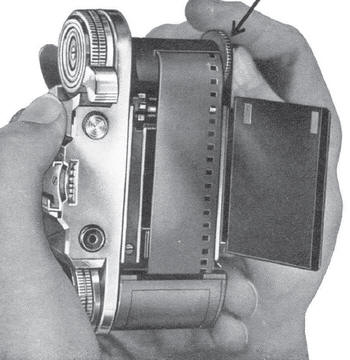

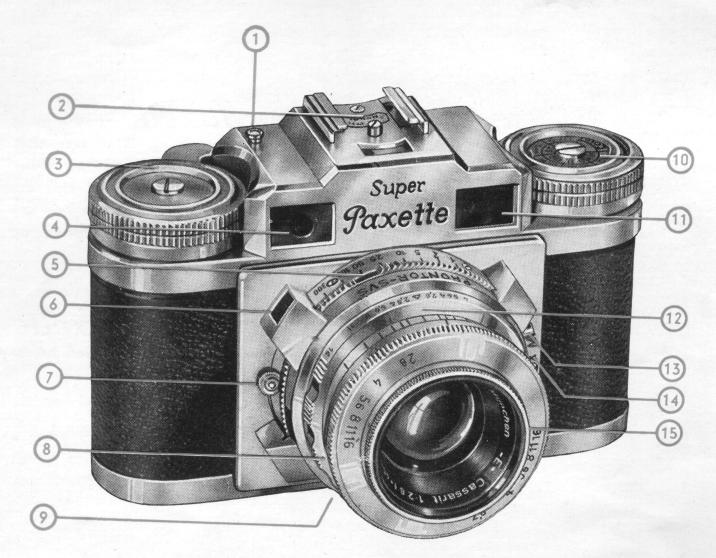
1 Rewind push
button 11
2 Accessories shoe with exposure counter
. 9
3
Rapid winder 10
4 Window of
coupled view and range finder 14/15
5 Shutter
speed setting ring 16
6 Socket for
cable release -
7 Shutter release
lever 20 8 Focusing ring
coupled with view and range finder
14
9 Camera back
locking ring with tripod bush
1/2 inch 5
10 Rewind
knob with film speed reminder . 16
11 Window of
coupled view and range finder 14/15
12 Depth
of field ring 18
13 Flash contact -
14 M
X V Adjustment 22
15 Aperture
setting 17
Introduction
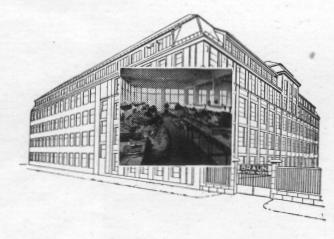
The SUPER - Paxette camera, made by Carl Braun of Nuremberg,
is a first class product which reflects the skill and care of the
operatives behind its manufacture and also the modern quality of
the plant itself. These facts are self-evident and are very quickly
confirmed by actual use of the camera.
This booklet describes
the SUPER - Paxette in detail and should be carefully studied before
handling the camera.
The SUPER - Paxette will prove a constant
friend and pleasant companion at all times.
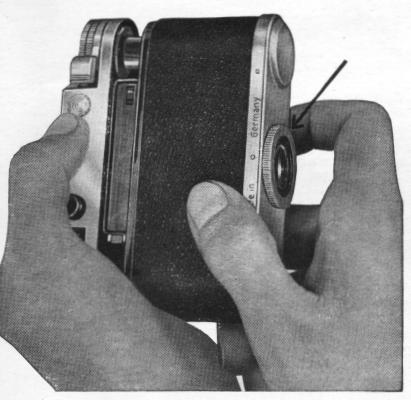
How to Open the Camera
Release the milled locking ring on the camera base by turning
it to the left. The back of the camera can then be slid off.
How to Insert the Film
Insert the film cassette into the film chamber
so that it engages in the rewind knob. Open the film pressure plate
and draw out the trimmed end of the film far enough to be inserted
into the slot of the take-up spool. At the same time ensure that
the lug on the take-up spool hooks into the perforation in the film.
Now wind the lower wheel of the empty spool until both sprockets
engage in the perforations of the film; it is also advisable to
depress the film rewind push button at the same time. Lastly, swing
the film pressure plate back into the closed position and close
the camera.
Important: Avoid direct sunlight when loading
or unloading the camera. Turn your back to the light and hold the
camera in your own shadow.
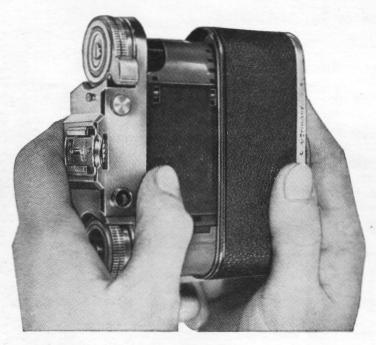
How to Close the Camera
To close the camera the back should be inserted between the
camera housing and front plate and the locking ring tightened.
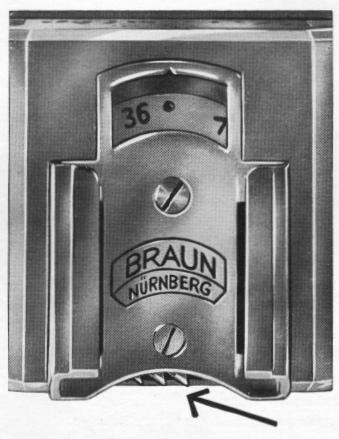
The Exposure Counter
The exposure counter reads backwards from 36 to 1, indicating
each time the number of unexposed frames still available.
After
the film has been inserted and the camera closed, set the counter
at the red dot near the figure 36 by turning the toothed wheel which
is positioned just below the maker's name.
Advance the film
twice (each time advancing the rapid wind lever 1 1/ 2 times until
a definite resistance is felt), and the film counter should then
read 36.
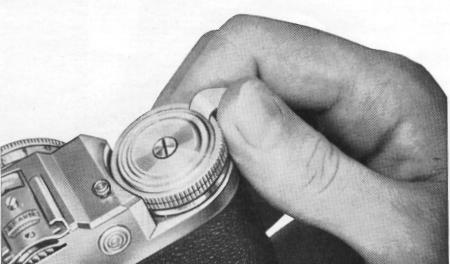
The Rapid winder
The shutter winding mechanism, film transport and film counter
are coupled and operated by means of the rapid wind lever. Advance
the lever as far as possible, then release it, allowing it to spring
back; then advance it approximately half way until a noticeable
resistance is felt. The film is now transported, the shutter wound,
the exposure counter correctly set and your Super-Paxette is ready
for the next shot.
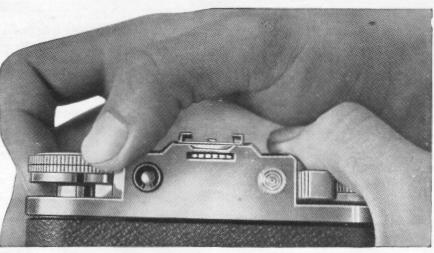
How to Unload the Camera
When the exposure counter shows figure 1, this
means that the entire length of the film has been exposed.
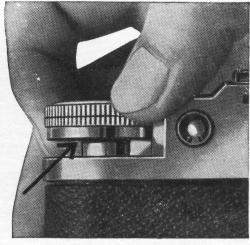
To
wind back the film, press the rewind push button, then pull out
the rewind knob as far as it will go and turn in the direction of
the arrow. Just before the rewinding operation is completed, a more
marked resistance will be noticeable indicating that the end of
the film is still held by the take-up spool. A few more turns will
wind the film completely into the cassette. The camera can then
be opened and the film changed.
Important: The rewind button
must remain depressed throughout the rewinding operation.
1. Open the camera
2. Insert film cassette
3. Attach film
to take-up spool
4. Close the camera
5. Set the exposure counter
6. Advance the rapid wind lever twice
7. The camera is ready
for the first shot
1. Press down rewind button
2. Pull out rewind
knob as far as it will go
3. Turn rewind knob in direction of arrow
4. Wind the entire film into cassette
5. Open the camera 6.
Take out cassette
Checking the Film Transport
In order to ensure that the film transport is functioning
correctly, pull up the rewind knob as far as it will go. If the film
is moving forward properly, the rewind knob will turn in the direction
opposite to that indicated by the arrow when the rapid winder is advanced.
Important: This check should be made for a short time only. After
checking, push the rewind knob in again.
Checking the
Rewinding
To check the rewinding action, release the locking
stud during the rewinding operation. If the mechanism is functioning
properly a very definite resistance will be noticeable. If no resistance
is felt, this means that the film has been pulled out of the cassette
and cannot be wound back. This fault can only be remedied by opening
the camera in a darkroom.
Important: Do not attempt to force the
film or the perforation of the film will tear. When continuing to rewind,
press in the lucking stud again.
|
|
|
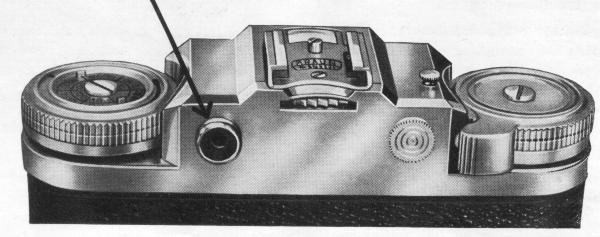
The coupled range finder of the S U P E R • ,Paxette does not only give the frame of the picture but also the range finder image which is visible as a light circular area in the centre of the field. By turning the focusing ring on the lens the exact distance to the subject is measured and automatically set. Attention: All interchangeable lenses for the Super-Paxette are coupled to the range finder. |
 |
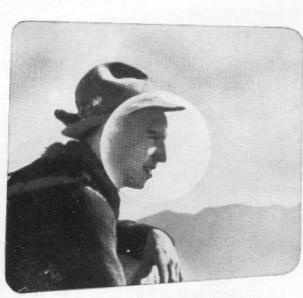 |
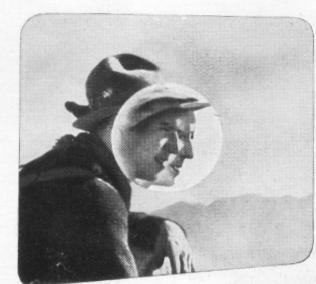
How to Use the Range Finder In the middle of the light circular area you will see a double image of the subject sighted. By turning the focusing ring these two contours should be made to coincide; in this way the exact distance to the subject is established and the lens focused. |
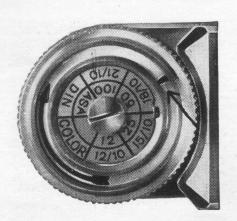 |
The Film Speed Reminder
In order to avoid errors when choosing aperture and shutter speed, set the film speed indicator to the speed of the film used as soon as the latter is inserted into the camera. |
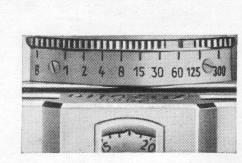 |
Exposure Time
The shutter is set by bringing the red mark on the milled ring of the shutter into register with the desired speed engraved on the collar of the shutter housing. |
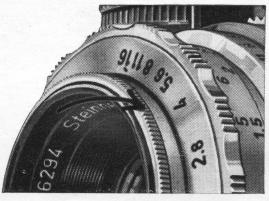 |
The Lens Diaphragm The lens aperture or diaphragm is set by means of the front ring on the lens. Bring the red dot into register with the black line at whatever setting is required. Note: Aperture 2.8 high speed - little depth of field. Aperture 16 slow speed - great depth of field. |
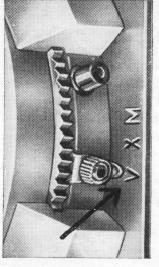 |
The Delayed Action Release
The setting lever has to be pushed from X to green V. This can be done only when the shutter is wound. Attention: When setting V is used, the shutter setting B cannot be used. After the delayed action mechanism has run off, the setting lever goes back to X automatically. |
 |
Depth of Field Ring
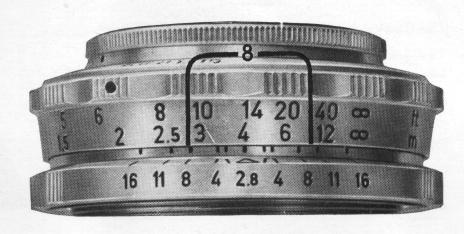
The depth of field or depth of definition comprises the zone from the foreground to the background of the picture which is sharply defined in the reproduced image. This area or depth varies according to the aperture chosen, that is to say, a large aperture (f/2.8) gives less depth of field and a small aperture (f/16) gives a greater depth of field. With the SUPER. Paxette the depth of field for every photograph can be easily read off the depth of field ring which is between the focussing ring on the lens and the shutter speed setting ring; this repeats on the left and on the right of the setting mark the range of apertures. |
 |
Changing the Lens
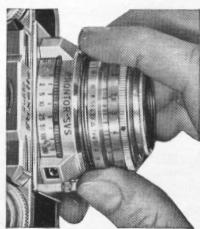
The lens should be screwed firmly home into the lens panel in a clockwise direction. If correctly screwed in, the central dot on the red engraved depth of field scale should be just below the engraving „SUPER-PAXETTE". Remove the lens by unscrewing it in the opposite direction. When screwing the lenses in and out they should be held by the knurled fixed ring bearing the depth of field scale. |
 |
The Attachable View Finder
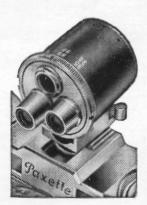
Without mask this view finder gives the exact framing of the picture when using the wide angle lens of 38 mm focal length. The mask must be used with long focus lenses of 85 and 90 mm. For the 135 mm tele-lens an additional mask is necessary, which is supplied together with the lens. Furthermore these focal lengths are engraved on the bottom edge of the view finder and on the mask. For High Demands! |
 Release the shutter gently and deliberately without jerking it, moving the middle finger only and not the whole hand. Allow the finger to rest on the release lever until the release action is completed. Remain perfectly still and composed while taking a picture, especially when taking snapshots. If you follow these rules you will be delighted with the excellent results achieved. |
Taking a Picture
The SUPER - Paxette should be held firmly in both hands with the rounded bottom edge resting in the palms of the hands. When the shutter is released hold the camera steady with the left hand. |
 |
Flash Synchronization for
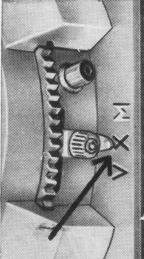
the Prontor SVS shutter The Gauthier Prontor SVS shutter is fully synchronized for flash, and enables you to set the lever in any desired position. Three settings are possible: Setting M, yellow. Draw out head of setting lever and set to M. In this position, the M-type flash lamps are ignited with shutter speeds of 1/30 sec. to 1/300 sec. Setting M cannot be used for electronic flashes. The delayed action release does not work. If no flash-gun is attached the shutter operates normally. |
Setting X, red. Draw out head of setting lever and set
to X.
In this position electronic flash shots can be taken at any shutter
speed. For flash lamps, only shutter speeds up to 1/30 second can be used. The
delayed action release does not work. If no flash unit is attached the shutter
operates normally.
Setting V, green. Only possible with a wound shutter.
After the delayed action mechanism has run off, the lever goes back to X automatically.
This position is used if you want to work with the delayed action release.
For flash shots the same conditions apply as for position "X".
Accessories for the SUPER - Paxette
Interchangeable lenses coupled to the range finder
| Wide angle lens Cboro f:3,5/38 Wide angle lens Westron f:3,5/35 Long focus lens Telexon f:5,6/85 |
Long focus lens Quinar f:3,5/85 Long focus lens Telenar f:3,8/90 Long focus lens Ennaston f:3,5/135 |
Prismatic View Finder Made by Steinheil
for focal lengths 38, 85/90 and 135 mm with parallax compensation.
TEWE-Polyfocus Universal View Finder for focal lengths 35/38,
45/50, 85/90 and 135 mm with parallax compensation.
Optical View Finder
for 38 mm with mask for 85/90 or 135 mm
Paximat 35 mm Slide
Projector with rapid slide changer. Amazingly simple to handle.
Branax 35 mm Enlarger can be used for reproduction and
macro photography in conjunction with ground glass adapter, intermediate rings
and repro lens.
Paxitron Home Flash works without dry
or wet batteries and takes its energy directly from the mains. Guide number
44 for 17/10 DIN = 40 ASA films. Light output: appr. 80-90 W/sec.
Pico Electrical attachable exposure meter masters all exposure
problems. Ranging from 15 sec. - 1/1000 sec.
Eveready and combi-cases -
filters and filtersets - sunshades
The right for change of construction
due to improvement is reserved herewith Printed in Germany
4-'57/5a